
When to Replace a Forklift: Breakdowns, Downtime Costs, and Lifecycle Planning
For warehouse operations, reliability is everything. Fleet managers depend on a forklift fleet that performs consistently, and that level of reliability doesn’t happen by accident. It requires proactive planning, strong attention to planned forklift maintenance, and a clear understanding of your fleet’s data.
Even when your fleet is running smoothly, determining the right time to replace, retire, relocate, or retain specific trucks can be challenging. Replace too soon and you lose valuable ROI; replace too late and you risk unexpected breakdowns — along with significant costs.
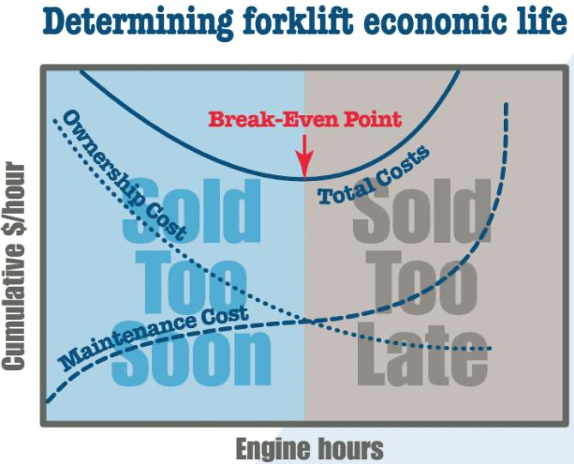
So how can you confidently decide when it’s time to update your forklift fleet?
Frequent Breakdowns: A Key Sign Your Forklift Is Nearing the End
A forklift that’s past its prime can cost far more than small repair bills. After years of service, issues such as worn forks, damaged structures, or hydraulic leaks may begin to appear. And in the world of forklift maintenance, problems rarely come alone. Once breakdowns begin, troubleshooting becomes more complex and costs can quickly escalate.
If you find yourself repeatedly addressing issues with a “trouble asset,” and downtime becomes unavoidable, it may be time to replace that forklift.
Downtime: The Hidden Cost That Impacts Productivity
A breakdown costs more than just the repair: it also disrupts your workflow.
Unexpected forklift downtime reduces productivity, forces operators to compensate with fewer trucks available, and can slow the flow of goods throughout your warehouse. To minimize downtime, it’s essential to stay current with planned maintenance and follow your forklift’s recommended service intervals. Consistent maintenance can prolong your equipment’s usable life and help you avoid costly interruptions.
Plan Ahead: Create an Exit Strategy for Each Forklift
Every forklift in your fleet should have a proactive replacement plan. Consider the environment it operates in:
- High‑use environments cause faster wear, requiring earlier replacement
- Standard‑use environments may allow for a longer lifecycle
A common guideline is to replace forklifts around 10,000 hours of use, or 8,000 hours for high‑usage operations. But how do you track usage accurately?
Track Utilization & Repairs for Data‑Driven Decisions
Keeping detailed records of your fleet’s service history and forklift utilization rate is crucial. A utilization rate above 90% typically indicates an overworked truck — one that may require action or even the addition of another unit to your fleet.
Manually tracking this data can be overwhelming, which is why many operations rely on a forklift fleet management system like Fleet Track.
How Fleet Track Helps You Optimize Your Forklift Fleet
Fleet Track is a user-friendly forklift fleet management software that provides a comprehensive view of your entire fleet. It tracks utilization, repairs, cost per hour, and overall performance so you can make informed decisions about whether to replace, retire, retain, or relocate a forklift.
By leveraging real-time data, Fleet Track helps you:
- Reduce unnecessary repairs
- Identify high-cost assets
- Improve productivity
- Extend fleet life
- Lower operating costs
Making informed decisions today can save time, money, and resources while keeping your operation running efficiently.
Get Started with Smarter Fleet Management
If you're ready to simplify fleet tracking and improve performance, contact your local UniCarriers Forklift dealer to learn more about Fleet Track and next steps for optimizing your forklift fleet management strategy.